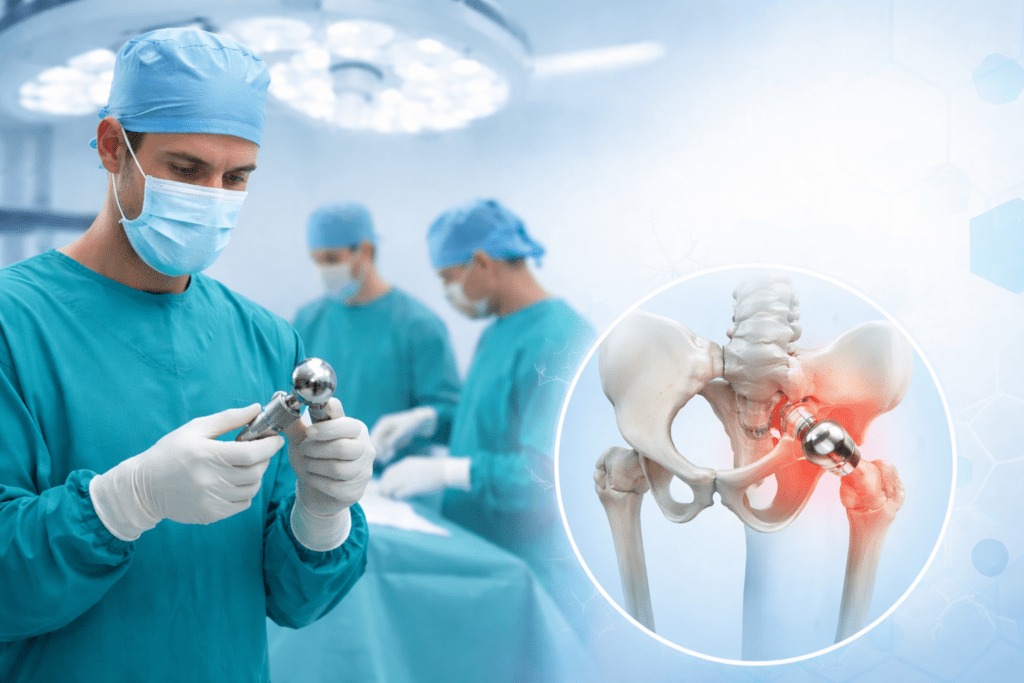


Why Runners, Dancers, and Desk Workers All Get the Same Hip Pain
Why Runners, Dancers, and Desk Workers All Get the Same Hip Pain (For Totally Different Reasons) A marathon runner limps into the clinic clutching the outer edge of her hip. An hour later, a classical dancer walks in describing a sharp catch deep in her groin every time she lifts her leg. By evening, a software engineer who spends nine hours a day at his desk complains of a dull, nagging ache in the same general area. Three completely different lives, three completely different routines and yet, as Dr. Rajat Jangir, Orthopedic Surgeon in Jaipur, I often find myself explaining the same joint, the same diagnosis category, and sometimes even the same treatment plan to all of them. Hip pain has a funny way of showing up in people who seem to have nothing in common. Understanding why can help you figure out what’s actually going on with your own body and why the fix isn’t always what you’d expect. The Hip Joint: One Structure, Many Jobs The hip is a ball-and-socket joint, built for both stability and a wide range of motion. It has to bear your entire body weight with every step while also allowing you to sprint, bend, twist, or hold a leg extended mid-air. That dual role weight-bearing workhorse and flexible mover is exactly why so many different lifestyles end up straining it in surprisingly similar ways, even though the root cause is rarely the same. Running is repetitive by nature. Every stride sends a small shock through the hip, and over the course of a single run, that can add up to thousands of impacts. On their own, none of these forces are dangerous. Repeated day after day, week after week, without adequate recovery, they start to wear down specific structures. Most commonly, I see: The pattern here is overuse. The joint isn’t malfunctioning it’s simply being asked to do the same motion far more often than it was designed to comfortably handle. The Dancer’s Hip: Too Much of a Good Range Dancers face almost the opposite problem. Instead of overuse in a narrow range of motion, they push the hip joint to its absolute limits, again and again, in positions most joints never encounter deep turnout, extreme extension, rapid pivoting. This extraordinary flexibility demand often leads to: Unlike the runner’s steady wear-and-tear pattern, dancers often develop pain from a handful of extreme movements repeated with intense precision flexibility and strength working against, rather than with, the joint’s natural limits. The Desk Worker’s Hip: Injured by Stillness This is the one people find hardest to believe. How can sitting still all day cause the same kind of pain as sprinting or dancing? The answer lies in what prolonged sitting does to the muscles surrounding the hip. When you sit for extended stretches, the hip flexors the muscles at the front of the hip stay in a shortened position for hours. Over time, they tighten and lose flexibility. Meanwhile, the glutes, which are meant to stabilise and power hip movement, weaken from underuse. This combination throws off the mechanics of the joint, and the hip starts compensating in ways it wasn’t built to. Common outcomes include: In this case, the hip isn’t overworked it’s underworked in the wrong way, left stiff and destabilised by inactivity rather than exhausted by motion. Same Symptom, Different Story What ties these three cases together is that all three patients often describe remarkably similar symptoms: a sharp or dull ache around the hip, discomfort that worsens with certain movements, and sometimes a clicking or catching sensation. Without a proper evaluation, it would be easy to assume they all have the same problem. But the underlying mechanism repetitive impact, extreme range of motion, or prolonged immobility is completely different in each case, and so is the right way to treat it. This is exactly why a detailed history matters as much as imaging. What you do for eight hours a day, how you move, and what triggers the pain often tell me more than an X-ray alone. How Treatment Differs by Cause Because the underlying mechanics are different, the treatment approach has to be tailored rather than generic. For runners, treatment usually focuses on load management adjusting training volume, correcting running form, strengthening the glutes and core, and allowing proper recovery between sessions. For dancers, the emphasis shifts toward controlled mobility work, strengthening the muscles that stabilise the hip joint through extreme ranges, and sometimes modifying specific movements that repeatedly stress the joint. For desk workers, the priority is often the opposite of what you’d expect: not more rest, but more movement. Stretching the hip flexors, strengthening the glutes, adjusting workstation posture, and breaking up long sitting periods with short walks can make a significant difference. In more persistent or structural cases such as labral tears or advanced impingement physiotherapy alone may not be enough, and options like targeted injections or minimally invasive arthroscopic surgery may be considered. When to Get It Checked Hip pain that lingers beyond a couple of weeks, worsens with daily activities, disturbs sleep, or comes with a locking or catching sensation deserves a proper orthopedic evaluation. Left unaddressed, many of these conditions gradually worsen and become harder to treat. A Word from Dr. Rajat Jangir Whether you’re logging kilometres on the track, holding an arabesque, or sitting through back-to-back meetings, your hip is working hard in ways that are easy to overlook until it starts hurting. At my clinic in Jaipur, I see patients from every kind of lifestyle, and the first step is always the same understanding exactly how your daily habits are interacting with your joint, rather than treating every hip pain complaint as identical. Frequently Asked Questions If hip pain is limiting your movement whether you’re an athlete, a performer, or someone who spends most of the day at a desk consult Dr. Rajat Jangir, Orthopedic Surgeon in Jaipur, for an evaluation tailored to your lifestyle and activity level. Share