

Introduction
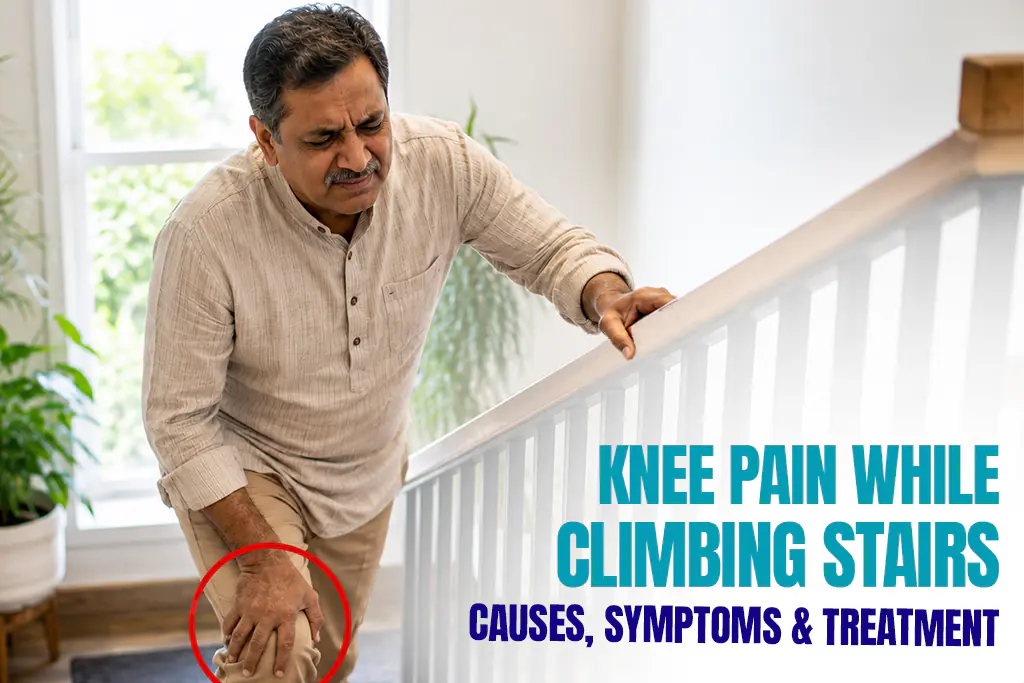
Do you feel pain in your knee every time you climb stairs? You are not alone. Many people experience discomfort while going upstairs or downstairs, but often ignore it in the beginning. What starts as mild discomfort can gradually turn into persistent knee pain that affects daily activities like walking, exercising, sitting, or even getting up from a chair.
Climbing stairs puts extra pressure on the knee joints compared to normal walking. When the muscles, cartilage, or ligaments around the knee are not functioning properly, this movement can become painful. Sometimes the issue may be temporary, while in other cases it can be linked to conditions such as arthritis, cartilage damage, ligament injury, or muscle weakness.
People often search online for why does my knee hurt while climbing stairs or best treatment for knee pain while climbing stairs, but understanding the real cause is the first step toward recovery.
Ignoring continuous knee pain may worsen the condition over time. Early diagnosis and proper treatment can help you regain mobility and reduce discomfort before the problem becomes severe.
Symptoms
Knee pain while climbing stairs can feel different from person to person. Some experience mild pain, while others notice sharp pain that affects movement.
Common symptoms include:
- Pain around or behind the kneecap
- Sharp pain while climbing or coming downstairs
- Swelling around the knee
- Knee stiffness after sitting for a long time
- Clicking or popping sounds
- Weakness in the knee
- Difficulty bending the leg
- Tenderness around the joint
- Feeling that the knee may give way
- Pain after walking for long distances
Some people also notice that the pain becomes worse after exercise or after standing for long periods.
If your knee pain is accompanied by severe swelling, redness, inability to walk, or sudden instability, medical attention should not be delayed.
Causes
There can be several reasons behind pain during stair climbing. Understanding the cause helps in choosing the right treatment.
1. Patellofemoral Pain Syndrome
This condition is often called “runner’s knee.” It happens when the kneecap does not move smoothly over the joint.
Symptoms may include:
- Pain in the front of the knee
- Discomfort during stairs
- Pain during squatting
- Grinding sensation
This is one of the most common causes of knee pain during stair climbing.
2. Osteoarthritis
Osteoarthritis develops when the protective cartilage in the knee gradually wears down.
Common signs include:
- Joint pain
- Swelling
- Knee stiffness
- Reduced movement
- Crackling sounds during movement
Age-related wear and tear can make climbing stairs particularly uncomfortable.
3. Meniscus Injury
The meniscus acts as a cushion inside the knee joint. Sports injuries, sudden twists, or accidents can tear this structure.
Symptoms include:
- Swelling
- Sharp pain
- Knee locking
- Difficulty moving the knee
4. Ligament Injuries
Ligaments provide stability to the knee. Damage to ligaments can result in:
- Knee weakness
- Swelling
- Pain
- Instability
5. Cartilage Damage
Damage to cartilage beneath the kneecap can lead to pain and irritation.
People with cartilage problems commonly complain about:
- Grinding sensations
- Knee stiffness
- Pain while using stairs
6. Weak Leg Muscles
Weak quadriceps and hamstring muscles may increase stress on the knees. Muscle imbalance can affect posture and place extra pressure on the joint.
Risk Factors
Certain factors can increase the chances of developing knee problems.
Age
As people get older, the joints naturally experience wear and tear.
Excess Body Weight
Additional body weight places more pressure on the knees during movement.
Lack of Physical Activity
A sedentary lifestyle weakens muscles and reduces flexibility.
Previous Knee Injury
Past ligament injuries or fractures may increase future risk.
Sports Activities
High-impact activities involving running and jumping can stress the knee joint.
Poor Footwear
Shoes without proper support can affect body alignment.
Treatment Options
Treatment depends on the exact cause and severity of symptoms.
Rest and Lifestyle Modification
Reducing activities that trigger pain may help decrease inflammation and stress on the knee.
Ice Therapy
Applying ice for 15–20 minutes can reduce swelling and discomfort.
Medications
Doctors may recommend:
- Pain-relief medicines
- Anti-inflammatory medications
- Joint support supplements
Physiotherapy
Physical therapy plays an important role in improving strength and mobility.
Benefits include:
- Better joint function
- Improved flexibility
- Reduced pain
- Stronger muscles
Supportive Knee Braces
Knee braces can help stabilize the joint and reduce strain.
Advanced Treatments
Depending on the condition, treatment may include:
If your symptoms continue for several weeks, consulting Dr Rajat Jangir best orthopedic doctor in Jaipur may help identify the exact cause and create a personalized treatment plan.
Many patients looking for specialized orthopedic care also search for best Dr Rajat Jangir orthopedic surgeon in Jaipur because timely treatment can help prevent further complications.
Exercises / Prevention Tips
Simple exercises and healthy habits can improve knee strength and reduce pain.
Straight Leg Raises
This exercise strengthens muscles around the knee without adding excessive pressure.
Hamstring Stretch
Stretching helps improve flexibility and reduce muscle tightness.
Step-Ups
Controlled step exercises improve balance and knee function.
Wall Squats
These exercises strengthen lower-body muscles.
Prevention Tips
- Maintain a healthy weight
- Exercise regularly
- Warm up before physical activity
- Wear supportive footwear
- Avoid sudden movements
- Stretch daily
- Improve posture
- Strengthen leg muscles
Following these habits can reduce the chances of future knee injury treatment needs and improve long-term joint health.
FAQs
Why does my knee hurt while climbing stairs?
Stair climbing places extra pressure on the knee joint. Conditions such as arthritis, cartilage damage, muscle weakness, or ligament injuries can contribute to pain.
Can knee pain go away without treatment?
Mild pain may improve with rest and exercise, but persistent symptoms should be evaluated by a specialist.
Which exercises help reduce knee pain?
Straight leg raises, stretching exercises, and strengthening exercises often help improve support around the knee.
When should I visit an orthopedic doctor?
Pain lasts for several weeks
Swelling continues
Walking becomes difficult
Knee locking occurs
Can knee pain be treated without surgery?
Many cases improve with medication, physiotherapy, and lifestyle changes without requiring surgery.
Book Appointment
Persistent knee pain should not be ignored. Early diagnosis can help prevent long-term joint damage and improve quality of life.If you are searching for Dr Rajat Jangir top orthopedic doctor in Jaipur or an experienced orthopedic doctor in Mansarovar Jaipur, schedule a consultation for expert evaluation and treatment guidance.