Knee Pain: Types, Causes and Treatment
A Complete Guide by Dr. Rajat Jangir, Orthopedic Surgeon in Jaipur
Knee pain is one of the most common complaints that brings people into an orthopedic clinic, and it doesn’t discriminate by age. A teenager might limp in after a sports injury, a young professional might complain of a dull ache after long hours at a desk job, and an elderly patient might struggle to climb stairs because of stiffness and swelling. As Dr. Rajat Jangir, a leading Orthopedic Surgeon in Jaipur, I see all these cases walk through my clinic doors every week, and the one thing I always tell my patients is this: knee pain is rarely “just one thing.” It has many faces, many causes, and thankfully, many effective treatments.
This blog breaks down everything you need to know about knee pain its types, what triggers it, how it’s diagnosed, and the treatment paths available today, from simple home care to advanced surgical solutions.
Understanding the Knee Joint
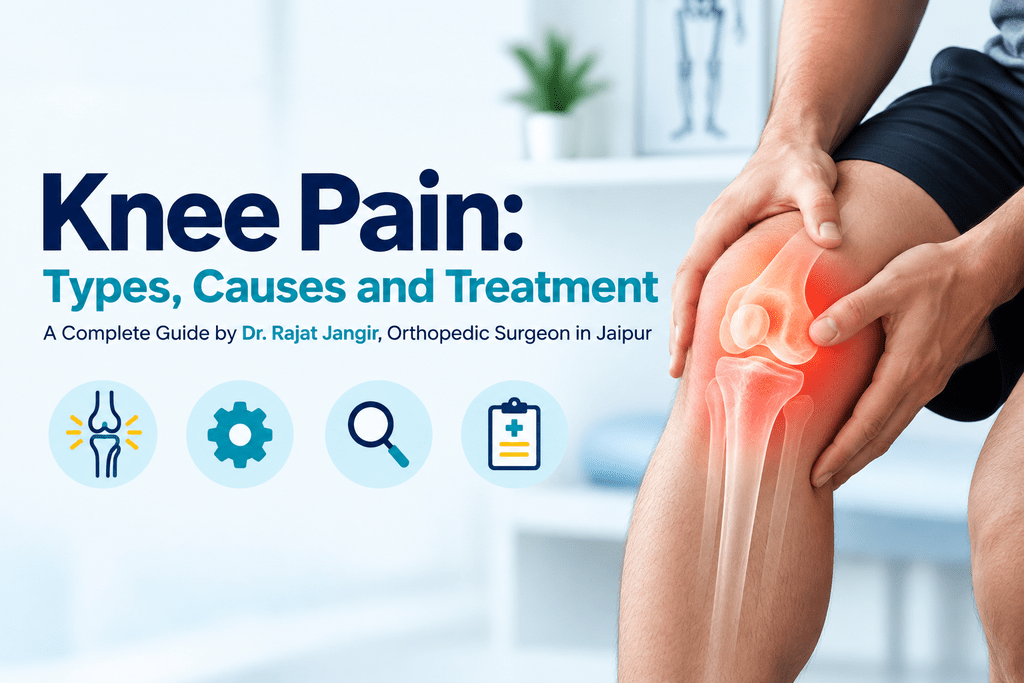
Before we talk about pain, it helps to understand what makes the knee tick. The knee is the largest joint in the body, formed where the thighbone (femur) meets the shinbone (tibia), with the kneecap (patella) sitting in front. Holding it all together is a network of ligaments, tendons, cartilage, and a cushioning layer called the meniscus. Because the knee bears the weight of the entire body while allowing movement in almost every direction, it is also one of the joints most prone to wear, tear, and injury.
Common Types of Knee Pain
1. Osteoarthritis of the Knee
This is by far the most frequent reason people over 45 visit my clinic. Osteoarthritis happens when the protective cartilage that cushions the ends of the bones gradually wears down over the years. The result is stiffness, swelling, and a grinding sensation, especially first thing in the morning or after sitting for a while.
2. Ligament Injuries (ACL and MCL Tears)
Athletes, gym-goers, and anyone who twists their knee suddenly during a fall or a sport are at risk of ligament damage. The Anterior Cruciate Ligament (ACL) and Medial Collateral Ligament (MCL) are the two most commonly injured. These injuries often come with a distinct “popping” feeling followed by instability, as though the knee might give way.
3. Meniscus Tears
The meniscus acts as a shock absorber between the thigh and shin bones. A sudden twist, a deep squat, or even routine wear in older adults can tear this cartilage, leading to swelling, locking, or a catching sensation when bending the knee.
4. Patellar Tendinitis (Jumper’s Knee)
Common among athletes who do a lot of jumping or running, this condition causes inflammation of the tendon connecting the kneecap to the shinbone. It typically shows up as a sharp pain just below the kneecap during physical activity.
5. Bursitis
Small fluid-filled sacs called bursae cushion the knee joint. When these become inflamed often from repetitive kneeling or overuse the front of the knee can become tender, warm, and visibly swollen.
6. Rheumatoid Arthritis
Unlike osteoarthritis, rheumatoid arthritis is an autoimmune condition where the body’s immune system mistakenly attacks the joint lining. It usually affects both knees at once and can cause persistent swelling, warmth, and fatigue.
7. Chondromalacia Patella (Runner’s Knee)
This condition involves softening or damage to the cartilage under the kneecap, leading to a dull ache that worsens with running, squatting, or climbing stairs.
What Causes Knee Pain?
There isn’t a single culprit behind knee pain it usually results from a combination of factors:
- Age-related wear and tear, which naturally thins out cartilage over time
- Sports injuries from sudden twists, pivots, or direct impact
- Obesity, which places extra load on the joints with every step
- Repetitive strain from occupations that involve kneeling, squatting, or heavy lifting
- Poor muscle strength around the knee, particularly weak quadriceps and hamstrings
- Previous injuries that were never fully rehabilitated
- Genetic and autoimmune factors, as seen in conditions like rheumatoid arthritis
Symptoms You Shouldn’t Ignore
While occasional mild discomfort after a long walk is normal, certain symptoms call for medical attention:
- Swelling that doesn’t go down within a couple of days
- Inability to fully straighten or bend the knee
- A visible deformity or the knee giving way
- Redness and warmth around the joint
- Pain that disturbs sleep or persists despite rest
- A popping sound at the time of injury followed by pain
If you’re experiencing any of these, it’s time to consult an orthopedic specialist rather than waiting it out.
How Knee Pain Is Diagnosed
At my clinic shoulder & Knee Surgery clinic in Jaipur, diagnosis usually starts with a detailed physical examination and a conversation about the patient’s activity levels, past injuries, and lifestyle. Depending on the findings, I may recommend:
- X-rays to check for bone alignment, fractures, or arthritis
- MRI scans for a closer look at ligaments, tendons, and the meniscus
- Blood tests if an autoimmune or inflammatory cause is suspected
- Ultrasound to assess soft tissue and fluid buildup
Getting an accurate diagnosis is the foundation of effective treatment guessing rarely helps and can sometimes make things worse.
Treatment Options for Knee Pain
The good news is that most knee pain doesn’t require surgery. Treatment is generally tailored in stages, starting conservative and moving to more advanced options only if needed.
Non-Surgical Treatments
- Rest and activity modification to avoid aggravating movements
- Physiotherapy to strengthen the muscles supporting the knee and improve flexibility
- Medications, including anti-inflammatory drugs to reduce pain and swelling
- Bracing or taping for added support during recovery
- Injections, such as corticosteroids or platelet-rich plasma (PRP), which can reduce inflammation and promote healing
- Weight management, which significantly reduces the load on the knee joint
Surgical Treatments
When conservative measures aren’t enough, surgical intervention may be considered:
- Arthroscopy, a minimally invasive procedure to repair torn ligaments or meniscus
- Partial or total knee replacement, recommended for advanced arthritis where the joint surface is severely damaged
- Ligament reconstruction, particularly for ACL tears in active individuals wanting to return to sport
Advances in surgical technique mean recovery times today are far shorter than they used to be, with many patients walking within days of a knee replacement procedure.
Prevention Tips for Healthier Knees
A little prevention goes a long way in protecting your knees for the years ahead:
- Maintain a healthy body weight to reduce joint stress
- Strengthen the muscles around the knee through regular, low-impact exercise
- Warm up properly before sports or intense physical activity
- Wear supportive, well-fitted footwear
- Avoid sudden increases in exercise intensity
- Listen to your body don’t push through sharp or persistent pain
Why Choose Dr. Rajat Jangir for Knee Pain Treatment in Jaipur
With years of dedicated experience in orthopedic care, Dr. Rajat Jangir combines a patient-first approach with modern diagnostic and surgical techniques to treat every form of knee pain from early-stage arthritis to complex ligament reconstructions. Every treatment plan is customised to the patient’s age, lifestyle, and long-term goals, whether that means getting back on the sports field or simply walking without discomfort again.
If knee pain is affecting your daily life, don’t wait for it to worsen. Early diagnosis and the right treatment plan can make a significant difference in how quickly and how completely you recover.
Frequently Asked Questions
When should I see an orthopedic surgeon for knee pain?
If pain lasts longer than a week, worsens with activity, or is accompanied by swelling, instability, or a popping sound, it’s best to get it evaluated rather than self-treating.
Can knee pain be treated without surgery?
Yes, the majority of knee pain cases respond well to physiotherapy, medication, lifestyle changes, and injections. Surgery is usually considered only when these options don’t provide relief.
Is knee replacement the only option for arthritis?
Not always. Knee replacement is generally recommended for advanced cases. Many patients with mild to moderate arthritis manage well with conservative treatment for years before surgery becomes necessary.
How long does recovery take after knee surgery?
Recovery varies by procedure — arthroscopic surgeries often allow patients to resume light activity within a few weeks, while knee replacement recovery typically spans a few months with physiotherapy support.
For a personalised consultation on knee pain treatment in Jaipur, book an appointment with Dr. Rajat Jangir, Orthopedic Surgeon, and take the first step toward pain-free movement.