

If climbing stairs, walking to the market, or even getting out of bed has started to hurt, you are not alone. Knee pain is one of the common reasons people visit an orthopedic clinic, and for many, it gradually affects their independence, daily activities, and sleep.
When medicines and physiotherapy no longer provide sufficient relief, doctors may discuss total knee replacement. This guide explains what the surgery involves, who may need it, what recovery looks like, and how to choose the right care in Jaipur. It is written for patients and families who want clear answers before making a decision.
What Is Total Knee Replacement?
Your knee is a hinge joint where the thigh bone (femur), shin bone (tibia), and kneecap (patella) meet. These joint surfaces are covered with smooth cartilage that allows them to glide with minimal friction.
In arthritis, this cartilage gradually wears away. The joint surfaces become damaged, which can cause pain, swelling, stiffness, and sometimes visible changes in leg alignment.
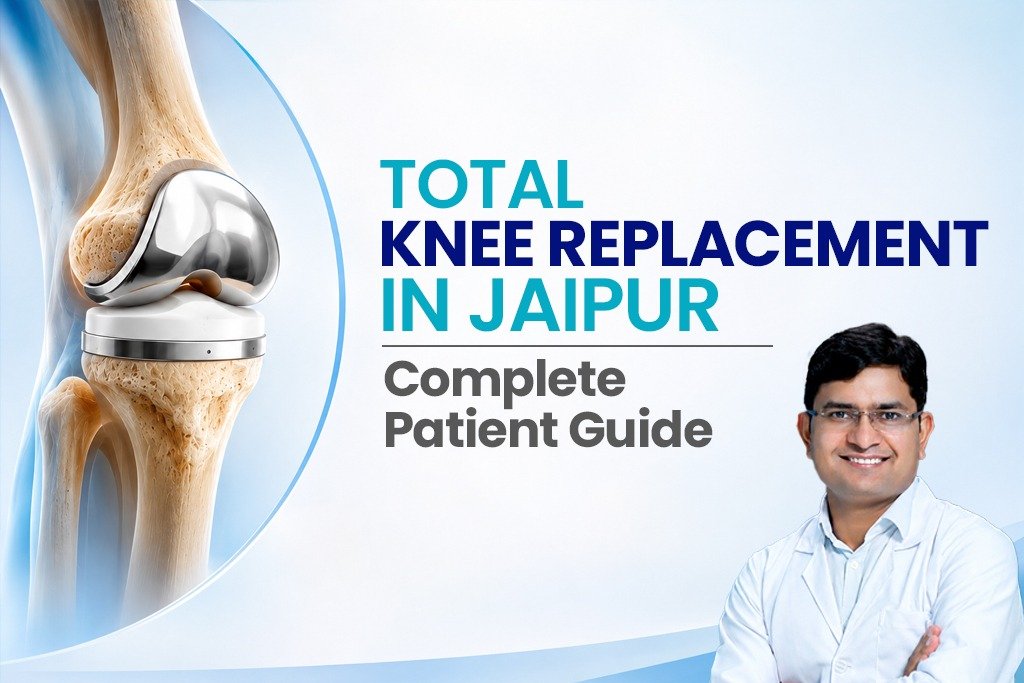
In total knee replacement (TKR), the surgeon removes the damaged joint surfaces and replaces them with artificial components made of metal alloys and medical-grade plastic. These components create new joint surfaces, helping reduce pain and improve movement.
Who May Need Knee Replacement Surgery?
Surgery is not usually the first step. Your doctor may suggest it when:
- Knee pain continues despite medicines, injections, exercise, and lifestyle changes.
- Pain disturbs your sleep or daily routine, such as walking, bathing, or using Indian-style toilets.
- X-rays show advanced arthritis with significant loss of joint space.
- The knee has become stiff, swollen, or visibly deformed.
- You find it difficult to perform activities that were once easy, like climbing stairs or sitting cross-legged.
The most common cause is osteoarthritis. Other causes include rheumatoid arthritis and arthritis that develops after an old injury.
Not everyone with knee pain needs surgery. Early arthritis is often managed with physiotherapy, weight management, activity modifications, and medication. A proper clinical examination and appropriate imaging help determine the extent of joint damage and suitable treatment options.
Finding the Right Knee Specialist Doctor in Jaipur
Many patients search online for the best knee replacement surgeon in Jaipur. It is natural to want a trusted specialist, but choosing a doctor should involve more than online rankings. Medical care is personal, and treatment outcomes depend on your health, knee condition, surgical approach, and rehabilitation.
Instead of relying only on labels, consider factors you can actually verify:
- Valid registration and qualifications. Make sure the doctor holds valid medical registration and recognised orthopedic qualifications.
- Focus of practice. Ask about the doctor’s experience and involvement in joint replacement procedures.
- Clear communication. A good doctor explains your diagnosis, treatment options (including non-surgical alternatives), and potential risks without pressure.
- Hospital facilities. Look for an appropriate operation theatre, infection-control measures, physiotherapy support, and emergency care facilities.
- Follow-up care. Ask whom you can contact if you have concerns after discharge.
Dr. Rajat Jangir, an orthopedic surgeon in Jaipur, consults patients at Mansarovar and evaluates knee problems ranging from early arthritis to advanced joint damage. The consultation focuses on understanding the patient’s condition and discussing suitable treatment options. Surgery is considered when it is clinically appropriate.
How Is the Decision Made? The Evaluation
Before recommending knee replacement, your doctor will usually:
- Take your medical history. Understand how long you have experienced pain, what makes it better or worse, and which treatments you have already tried.
- Examine the knee. Assess movement, alignment, stability, and muscle strength.
- Order imaging. Standing X-rays are commonly used to assess the extent of knee arthritis. Additional imaging, such as an MRI, may be recommended when clinically necessary.
- Check your general health. Blood tests, heart evaluation, and assessment of conditions like diabetes and high blood pressure may be required before surgery.
If you have diabetes, thyroid problems, or heart disease, these conditions should be evaluated and appropriately managed before surgery to help reduce the risk of complications.
What Happens During the Surgery?
Total knee replacement is performed in a hospital operation theatre, usually under spinal anaesthesia (which numbs the lower part of your body), sometimes with sedation. General anaesthesia may also be used in some cases.
In broad steps, the surgeon:
- Makes an incision over the front of the knee.
- Removes the damaged cartilage and a small amount of underlying bone.
- Shapes the bone ends to fit the implant.
- Places and secures the artificial components.
- Checks the knee’s movement, alignment, and stability.
- Closes the incision.
The operation commonly takes around one to two hours, although the duration may vary depending on the patient’s condition and surgical complexity. The exact technique and implant type are selected based on your anatomy and individual needs, which your surgeon will discuss with you.
Hospital Stay and Recovery
Recovery is a team effort involving the surgeon, physiotherapist, and patient.
First few days: Most patients stay in the hospital for a few days, depending on their recovery and overall health. Pain is managed with medicines, and physiotherapists help patients stand and take their first steps, often within a day of surgery, if medically appropriate.
First 2 weeks: Patients generally walk with a walker or other support, perform gentle bending and straightening exercises, and follow wound-care instructions. Some swelling and discomfort are normal during this period.
6 to 12 weeks: Many patients gradually return to light daily activities, with improvements in pain and movement. Walking ability generally improves with continued rehabilitation.
3 to 6 months and beyond: Strength, mobility, and stamina continue to improve. Many patients experience significant benefits during this period, although recovery varies from person to person.
Physiotherapy plays an essential role in recovery. Following your surgeon’s and physiotherapist’s exercise recommendations helps improve movement, strength, and flexibility and may reduce the risk of stiffness.
Risks and Limitations
Every surgery carries potential risks. These can include infection, blood clots, stiffness, persistent pain, implant-related problems, and anaesthesia-related complications. Some complications can be reduced through preventive measures, while others may require medical treatment. This is why your surgeon will review your medical conditions beforehand and explain the necessary precautions.
Results differ between individuals. A responsible surgeon will explain the expected benefits and potential limitations without promising a guaranteed outcome.
Tips for Preparing for Surgery
- Take medicines as advised and keep diabetes and blood pressure appropriately controlled.
- Maintain a healthy weight, since extra weight puts additional pressure on the knee.
- Do gentle strengthening exercises if your doctor allows.
- Prepare your home by arranging a western-style commode or commode chair, removing loose rugs, and ensuring good lighting.
- Plan for family support during the first few weeks.
- If you smoke, discuss stopping smoking before surgery, as smoking can slow healing.
Life After Knee Replacement
Many patients find daily activities easier after completing their recovery. Walking, climbing stairs, and low-impact exercises like swimming or cycling may be encouraged, depending on individual recovery and medical advice. High-impact activities such as running or jumping are generally discouraged.
Regular follow-up visits help your doctor monitor your recovery and the condition of the implant over the years.
Questions to Ask at Your Consultation
Whether you are meeting Dr. Rajat Jangir or any other doctor, consider asking:
- Do I really need surgery now, or can I try other treatments first?
- What type of implant and surgical technique do you recommend for me?
- What are the risks in my specific case?
- How long will I stay in the hospital, and what will recovery look like?
- What will the total expected cost include?
- Whom should I contact after discharge if I have a problem?
A second opinion is always reasonable for a decision this important.
When Should You See a Doctor?
Do not ignore knee pain that:
- Lasts more than a few weeks.
- Keeps you awake at night.
- Comes with swelling, redness, or fever.
- Makes the knee give way or lock.
- Limits your daily activities.
Early evaluation helps identify the cause of knee pain and provides an opportunity to explore appropriate treatment options, which may not necessarily involve surgery.
Final Thoughts
Total knee replacement in Jaipur is available at many hospitals, but the right choice is built on proper diagnosis, informed decision-making, and good follow-up care. Understand your options, ask questions, and take the time you need to decide.
If you are living with knee pain and want a professional opinion, you can consult Dr. Rajat Jangir, orthopedic surgeon in Jaipur, for a detailed evaluation and guidance on suitable treatment options. To learn more about his practice, visit www.shoulderkneeexpert.in.
Book a Consultation
Dr. Rajat Jangir
Orthopedic Surgeon, Jaipur
Address: Petrol Pump, 67/34, New Sanganer Rd, near Heera Path, Mansarovar Sector 6, Jaipur, Rajasthan 302020
Phone: 81048 55900
Website: www.shoulderkneeexpert.in
Disclaimer: This article is for general information and educational purposes only. It is not a substitute for professional medical advice, diagnosis, or treatment. Please consult a qualified doctor about your individual condition.